
Kayser Automotive Systems GmbH is realigning its SAP supplier management: The company is replacing scattered information and manual tracking with a digital supplier qualification process using top flow, top xRM, and integration with the prego services portal. The result: reliable data, automated certificate verification, and a process that confidently manages the complexity of global supply chains.
Anyone who walks into the Kayser Automotive production halls in the morning can see right away: Work procedures are well-established, and processes are seamlessly integrated. As an international automotive supplier of fluid and air management systems, Kayser relies on precise, stable processes. To ensure these processes remain sustainable in the long term, the preparatory steps and material flows must also be just right—right down to supplier evaluation and qualification, which are essential for enabling stable production in the first place.
But for a long time, things didn’t run smoothly: supplier data was buried in Excel spreadsheets, certificates were scattered across mailboxes, and employees could only identify contacts through old emails. In short: a comprehensive system was missing. This proved particularly problematic during the annual supplier qualifications, which had become nearly impossible to manage manually.
The result: a lack of visibility, repeated coordination efforts, and avoidable errors. For example, employees missed deadlines because important documents were scattered across different departments. It was also often unclear who was responsible on the supplier side. The manual process—which had worked for years—was increasingly reaching its limits due to more complex partner networks and rising compliance requirements.
“At one point, we were practically in a constant state of alert,” recalls Jürgen Kröß, SAP Global Expert. “Not because anything had gone completely wrong—but because we didn’t realize until it was too late that a certificate was about to expire or that documents were missing.”
As requirements became more stringent, it became increasingly clear that a fundamentally new approach was needed. The automotive supplier therefore decided to modernize its supplier qualification process from the ground up.
The goal was to create a system that centrally manages and automatically verifies supplier data and enables transparent, consistent communication. “The decision to adopt a digital system was an important step for us in streamlining our work, systematically improving data quality, and establishing a process that can be scaled as needed,” explains Tanja Diekmann, project manager at Kayser.
To achieve this goal, Kayser brought two experienced specialists on board: top flow, which specializes in SAP-related processes and is the developer of the enterprise content management system top xRM, and prego services, a provider of a cloud-based supplier portal.
Tanja Diekmann: “One of the key factors in our decision to choose top flow was the tight integration of accounts payable management, contract documents, and certificates within a single system. We also knew from other companies that top flow and prego services work very well together. That gave us even more confidence.”
Both systems should be connected via a new Purchase API in such a way that automated SAP supplier management is established—from the portal through top xRM to the supplier master data in SAP.

In their efforts to achieve seamless and efficient processes, the project managers relied on a proven, systematic approach:
First, the team implemented top xRM—including the associated supplier file and supplemented by the digital contract file, which will centrally consolidate all relevant contract documents in the future. It then expanded the Purchase API to prepare Kayser’s SAP architecture for integration with the prego services portal.
“The major advantage of combining the supplier file and the portal is that Kayser retains full data sovereignty and now has a single point of truth with top xRM. At the same time, suppliers can proactively update their data via the portal,” explains Jürgen Zeifang, Head of ECM Implementation at top flow. “However, the integration requires clearly defined interfaces—so designing a reliable data transfer process was a key task of the project.”
With the API serving as the link, the project team was now able to seamlessly integrate the supplier portal as well. Since then, suppliers have been registering through the portal, maintaining their data, uploading certificates, and completing compliance questionnaires. The user interface guides them step by step through all tasks and automatically reminds everyone involved of upcoming deadlines.
“We used to have to call every supplier to follow up,” recalls a buyer. “Now we can see in real time which data is missing or which certificates are about to expire. That saves us time and stress every day.”
However, the real added value comes primarily from the interaction between the systems. The guiding principle is this: prego services handles interactions with suppliers, while top flow manages the processes in the background and ensures that SAP receives only verified, complete data. The Purchase API acts as the connecting element. This creates a three-step process that reduces sources of error and makes workflows transparent:
This ensures that SAP receives only verified information: Once approved, top xRM automatically transfers the data to the SAP vendor master. However, the vendor file remains the central access point for employees and provides a unified user interface.
Today, the procurement department operates in a much more structured manner and without the inefficiencies of the past. Employees can now see at a glance which tasks are still pending, which approvals are due shortly, and what information is missing. The process is also becoming more transparent for suppliers, as they can complete all tasks centrally in the portal and track their processing status at any time.
“Thanks to automation and the seamless integration of our systems, we’re not only saving time but also significantly reducing the error rate,” Tanja Diekmann summarizes. “We now have a process that helps us meet international requirements.”
One reason the transition went so smoothly was that Kayser got everyone involved on board early on, announced the changes, and highlighted the benefits for all departments. Through global training sessions, the company also ensured that both employees and suppliers quickly understood how the new process worked.
Kayser Automotive has fundamentally modernized its supplier qualification process. Instead of Excel spreadsheets, emails, and scattered files, the process is now fully digital—from the questionnaire to automated data transfer. Workflows are clearer, data quality is higher, and collaboration is significantly more structured.
The project demonstrates how modern IT environments work: clear responsibilities, a shared process, less manual work, and greater transparency—a system that grows with the demands placed on it.
Or, as Jürgen Kröß puts it:
“What used to be handled through many different channels is now a cohesive process. This makes our work smoother—and significantly more reliable. And we’re not done yet: In the future, we’ll be adding more certification questionnaires—especially on the topics of sustainability and climate protection—to make our supplier process even more future-proof.”
“With top flow, top xRM, and the portal integration from prego services, we’ve created an end-to-end process that makes our work noticeably easier. Automation reduces errors, creates transparency, and ensures that supplier data is always up to date.”
Jürgen Kröß, SAP Global Expert
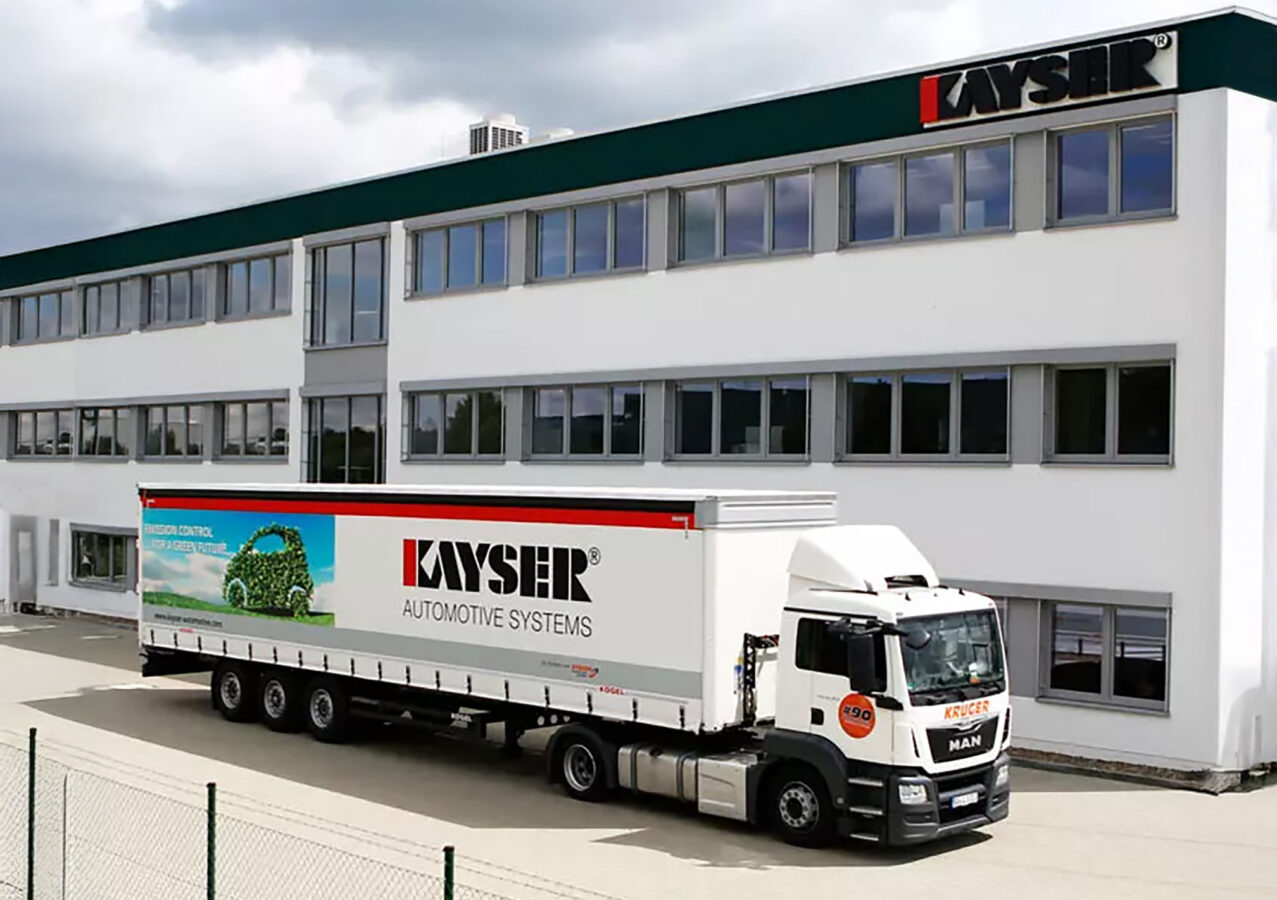
Headquarters: Einbeck, Lower Saxony
Industry: Automotive supplier
Portfolio: Fluid management, hose systems, filters, valves, battery management components
Revenue: approx. 440 million euros
Employees: about 3,600
Website: www.kayser-automotive.com

top flow GmbH


