

Key production figures: Learning from the past, acting in the moment
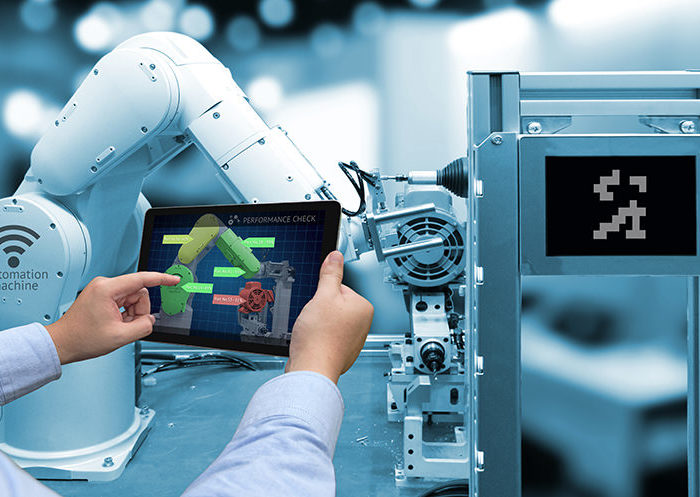
With systematically prepared key production figures, companies can make their entire processes much more efficient.
Countless amounts of data are already generated in production today, which companies can collect, merge and consolidate into key production figures. Prerequisite: They automate the data flow with the help of a Manufacturing Execution System (MES). However, being able to generate key production figures in terms of key performance indicators (KPIs) in this way is only half the battle. It is just as important to work systematically with the values as it is to collect machine data and production data, as this is the only way to unlock their full potential. The first key distinction is between real-time values and key figures that provide information about past developments.
Real-time values: always keeping an eye on the situation on the store floor
Real-time values make the current situation on the store floor transparent. Depending on the technical infrastructure, there are no longer any noticeable delays between the actual event on a machine, the logical processing and the visualization of the derived result. As part of this condition monitoring, those responsible, such as production managers or maintenance staff, can find out, for example, how fast a machine is currently working, how many pieces it has already produced for an order, when the order is expected to end or whether a machine is currently at an unplanned standstill. This information is valuable because immediate action can be taken if necessary. Employees on the shop floor can deal with reported faults in a targeted manner or prevent downtimes altogether – for example, because they are informed in good time when material is running low. However, it is not enough for the values to be processed by a system to ensure a fast response time.
WEBINAR
Establishing transparent production processes
Find out how you can bring more transparency to your production and uncover optimization potential.
Register for the webinar now
Deviations must be clearly communicated
Those responsible must also be aware of relevant events – provided that they are not constantly keeping an eye on the values. It is therefore important that the system automatically recognizes deviations in the key production figures and then communicates them clearly. In some cases, the machines themselves register when something is wrong and pass this information on to the MES – for example, an unplanned shutdown during an ongoing production order. In some cases, however, diagnostics also take place in the Manufacturing Execution System itself by comparing the current actual values with stored target values. If defined tolerances are exceeded, this must be clearly communicated. What this looks like in each individual case depends on the situation: Sometimes a pop-up message on the screen of the production manager’s PC is sufficient, in other cases a push message on their smartphone is the right way to go. Some companies also install large displays on the shop floor – under the ceiling, for example – that can be easily seen from anywhere. This has the advantage that the employees who are looking after one or more machines are directly informed. It is true that most machines also signal a fault themselves. In practice, however, the warning lights can only be seen in the immediate vicinity. This no longer does justice to current developments, where fewer and fewer employees are operating more and more machines and systems.
Continuous improvement with KPIs
Real-time values are therefore aimed at identifying acute problems on the shop floor and rectifying them immediately. Key figures that evaluate past data, on the other hand, are intended to systematically assess performance on the store floor and identify structural deficits or potential in order to then develop and implement fundamental measures. It is therefore based on a PDCA cycle (Plan, Do, Check, Act) that aims to achieve continuous improvement.
How short or long the intervals are depends on the respective purpose and an optimal cost-benefit ratio – anything from daily to quarterly is conceivable. Daily or even shift-related evaluations can help to learn about the effect of individual changes on the store floor. If KPIs are collected over a longer period of time, it is possible to determine whether the overall development is appropriate. In all cases, the analysis period and frequency for the respective KPI must be selected in such a way that trends can be identified and linked to the measures. At the same time, the effort involved must remain reasonable. This does not mean the effort required to generate the KPIs. With an MES, this is possible at any time at the touch of a button. However, an interdisciplinary steering committee – at least in the best-case scenario – must also interpret and discuss the generated values. Depending on the results, consideration must also be given to where adjustments can be made. It is important to note that the PDCA cycle suggests to a certain extent that the actual values can always reach the target values if all machines are running optimally and the processes are perfectly aligned. However, this assumption is wrong. Because reality sets limits. Therefore, when comparing planned target values and measured actual values, the possibility that the assumptions made are unrealistic and need to be adjusted must always be taken into account. This in turn can have an impact on the calculation of expenses and therefore prices.
Key production figures: Transparency has a psychological effect
Key production figures – both real-time values and KPIs relating to the past – also have a strong psychological effect. This is because the transparency they create about the situation on the store floor makes employees aware that their work is traceable. This alone often leads to changes in individual behavior. In addition, many employees develop an ambition to participate in continuous improvement. However, this is only possible if they can see the results of their efforts for themselves – for example, via charts displayed on the shop floor that show a decreasing throughput time curve and an increasing overall equipment effectiveness (OEE) curve over the months. It is even more consistent to not only inform employees about developments, but to actively involve them in continuous improvement. An institutionalized process through which suggestions can be addressed to those responsible and which provides for binding feedback has proven its worth.
You might also be interested in…
E-book: How to make your processes fit for digitalization
Digitalization makes company processes more efficient. However, this only applies if the processes are already running smoothly beforehand. In the e-book “Digitize processes – and optimize them in the process”, you can read how to put your existing processes to the test and improve them.



