

 Overview
Weidmann Electrical Technology AG – Digital craftsmanship – Digital production – integrated with top MES in SAP
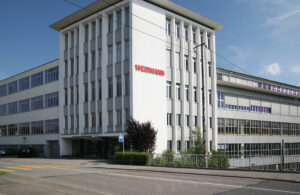
In a complex manufacturing process, Weidmann Electrical Technology AG produces customized insulation components. With top MES top flow ensures smooth interaction between modern automation and proven craftsmanship.
The Manufacturing Execution project at Weidmann at a glance
The goal
- Collecting machine and operating data to make processes more efficient and reduce reject rates
- Improved planning and capacity utilization through intelligent data analysis
- Optimized guidance for workers through user-friendly terminals
- Largely paperless production
The solution
- Go Live of top MES as the new Manufacturing Execution System in all production stages
- Automatic recording of machine and operating data as a basis for better planning, machine availability and performance, with lower reject rates
- Simple coordination of the manual work steps thanks to intelligent worker guidance
- Required documents are available electronically
When Heinrich Weidmann founded his first company in the Swiss municipality of Rapperswil in 1877, the electrification of the world was still in its infancy. Horse-drawn carriages and gas lanterns dominated the streetscape, electric light was a rarity – but was gradually becoming more and more widespread. Electrification is also driven forward by the development of transformers. Heinrich Weidmann recognizes the signs of the times early on and begins to develop insulation technologies for transformers and energy systems.
Today, almost 150 years later, Weidmann Electrical Technology AG is an important pillar of the Weidmann Group, which now employs around 2,700 people worldwide at around thirty production and service locations. One of the key secrets of its success: The company does not rely on “off-the-shelf” solutions, but adapts its products to the specific needs of its customers – including well-known transformer manufacturers such as Siemens and others.
Flexibility of top MES creates breakthrough for complex production requirements
Customer-specific production requires modern IT that grows with the customer’s needs. Here, the company identified a certain need to catch up. Erwin Bless, SAP Project Manager at Weidmann, explains:
“We felt the effects of globalization late, from around 2010, but then all the more strongly. In order to maintain our leading position on the global market, we had to react. To this end, we outsourced parts of our production abroad – for example to Croatia and Ukraine – and are now gradually digitalizing our production processes.
”
Although modernized production was essential for the targeted growth, the company initially found it difficult to implement. This was because the initial conditions and processes were extremely complex:
“Our production is multi-stage, and the requirements in each production stage are very different. Accordingly, we need solutions that offer a great deal of flexibility,” reports Erwin Bless
– and roughly outlines the production processes in two areas that build on each other:
Production of preliminary products:
The company initially produces large batches of preliminary products such as insulating boards of different thicknesses, which the workers produce from cellulose fibers and water on the board machines in a largely automated process. Until the company processes these individually in a second step, they are temporarily stored in a high-bay warehouse.
Customization:
Customization ultimately starts with a specific order. To do this, the workers take the panels in the required thickness from the high-bay warehouse and adapt them to the specific customer requirements by sawing, milling and other processing steps – for example with regard to the desired shape. This work is largely manual in nature and is therefore carried out manually.
Until recently, the plant employees received the necessary information on paper. The work preparation department printed out the order stored in the SAP system and distributed it to the workstations involved. If changes were requested at short notice, the same procedure was followed.
“This procedure was extremely non-transparent,” summarizes Erwin Bless. “We could never really understand to what extent an order had already been processed or how long individual processes took, as only the final result was ever reported back,” he continues.
The highlights of the SAP-integrated solution for Weidmann
- SAP ERP remains the leading system throughout the company.
- top MES is directly integrated into SAP, no new interfaces are required.
- top MES facilitates the automatic recording of operating and machine data, thus increasing the quality of planning data and the productivity of the machines.
- User-friendly terminals provide the workers with all the important order information.
- Thanks to special logics for top MES, workers can coordinate their work better.
- The largely paperless production eliminates the need for printouts and their distribution and massively reduces the amount of changes required.
top MES – the game changer
“Although we now knew what was going wrong at our company and also found numerous organizational starting points for improvements, we still lacked a suitable Manufacturing Execution System (MES) as a technical basis for new concepts,” recalls Erwin Bless.
This changed when employees at the company came up with the idea of asking an old acquaintance for help. Several years ago, Weidmann had already successfully introduced the SAP add-on top xRM from the Bad Saulgau-based company top flow for document management. Many of those involved at the time remembered the trusting cooperation and approached top flow about their Manufacturing Execution System top MES. top flow explained the basic application possibilities in an initial presentation and then began working with Weidmann on a proof of concept.
Erwin Bless: “Initially, we limited ourselves to optimizing the use of our corrugated board presses. But it was clear to us right from the start that this was just a test balloon and not the goal.”
On the way to Industry and Craft 4.0 with top MES
No sooner said than done. As the proof of concept quickly proved convincing, Weidmann quickly put the approach into practice. The joint project team implemented top MES as the new MES system and gradually connected the various machines. The team then focused on systematically recording order and machine data and, based on this, outputting certain key figures. This was intended to improve the planning data for orders and the productivity of the machines. The machine data collection should also make it easier for production management to find the causes of machine failures, performance losses and quality defects.
top MES: Machine data integrated – OEE analysis automated
“In fact, by connecting the machines, we were even able to automatically record data for calculating the OEE (Overall Equipment Effectiveness) for the first time,” summarizes Erwin Bless. “We can now see how important indicators such as availability, performance and quality develop over time and can therefore identify potential problems more quickly – and solve them.”
top MES: Production digitized – paper eliminated
However, Weidmann did not leave the innovations at a better machine connection, but also used top MES to streamline and digitalize manual production in the second production step. To this end, the workstations were rearranged according to the WPS (Weidmann Production System) approach so that the individual production steps are now arranged in a line. This allows the workers to pass each processed workpiece directly to the downstream production step. Weidmann also equipped each workstation with a terminal that is operated via a user-friendly interface. When the workers log in, they now receive a drop-down list with the orders for which they are responsible. This eliminates the need for paperwork and work on demand, and also makes it easier for work preparation to provide information about last-minute changes to orders. The documents required for the work, such as technical drawings, are also stored in the system for each order. Once employees have completed their production step, they provide feedback to the system, which then releases the element for the next work step.
Erwin Bless: “Now it is finally transparent which processing step an order is currently in. The system also records the time taken in the individual work steps. This gives us insights that we can use for improved planning, among other things.”
Future-oriented production processes with SAP-integrated Manufacturing Execution – top MES
“Thanks to our modernized production, we are currently gaining significant momentum in the competitive environment. Our market is also receiving an additional boost from the expansion of renewable energies in many countries,” summarizes Erwin Bless.
Weidmann Electrical Technology AG has set an important course for a successful future.
Nevertheless, much remains to be done – after all, modernization is currently limited primarily to Europe. And even here it is not complete. “A top MES project is currently underway for our bar milling machine in Switzerland. We are also working on connecting further board machines to top MES for our plants in Ukraine and the USA,” explains Bless. “As soon as this has been completed, we will move forward. We are currently discussing which sites and workstations will be allowed to introduce top MES next.”
Weidmann Group
- Location: Rapperswil-Jona
- Portfolio: Products for electrical engineering, medicine and pharmaceuticals
- Turnover: approx. CHF 380 million
- Foundation: 1877
- Employees: approx. 2,700
- Internet: www.weidmann-group.com
Success Story Weidmann


