
The Kramski Group is always close to its customers: The specialist for stamped and hybrid parts is therefore always able to design customized sample concepts and produce prototypes based on them. At the same time, the company also produces large quantities in series on request – for important sectors such as medical technology. The starting point for The starting point for flexible production is top MES as the central tool for digitalization.
Around 11 million people in Germany officially suffer from type I and II diabetes. Medicine can help many of these people if doctors diagnose the disease at an early stage and initiate therapeutic measures in good time. In addition to a change in diet, this often includes regular self-monitoring of insulin levels. Kramski, a family-owned company based in Baden-Württemberg, produces important subcomponents for the devices required for this. Founded in Pforzheim in 1978, it is now represented at four locations on three continents, employs a total of around 700 people and generates an annual turnover of more than 100 million euros worldwide. Its customers for stamped and hybrid parts include well-known companies from various industries. However, although the customers come from different sectors such as medical technology or the automotive industry, they all have one thing in common: they all rely on the high quality of Kramski products and the company’s ability to respond to individual customer requirements.
One of the Kramski Group’s strengths is its commitment to staying close to its customers. This enables the company to design custom sample concepts and, based on those, manufacture prototypes. It is also capable of producing large quantities in series. Currently, total annual production exceeds three billion parts. The company frequently receives manufacturing orders from customers via Electronic Data Interchange (EDI)—and must respond to them promptly. Even individual batches often involve high production volumes.
“It is therefore important for our company to be able to ramp up production quickly if necessary, but still keep the reject rate as low as possible,” reports Micha Holzmann, IT specialist at Kramski. “A modern Manufacturing Execution System (MES), which we can use to record Overall Equipment Effectiveness (OEE) in production, for example, is helpful for this. Unfortunately, until recently we didn’t have a suitable system for live operation that really met our expectations in this respect. We therefore relied primarily on the experience of veteran employees.”
Until 2018, production confirmations were actually almost exclusively carried out manually by the workers for historical reasons, initially using time cards. The company then used a terminal-based subsystem in which the workers recorded the start and end times of the shift as well as rejects electronically for the first time. This enabled the company to carry out significantly faster evaluations, but the solution did not offer a fully automated, future-proof MES. It was also not possible to systematically collect machine data with the solution. Kramski therefore decided to finally establish the basis for digitized production planning and control (PPC), which would enable OEE-supported optimization of production processes in the future – and which would not require any new interfaces thanks to a close connection to SAP. After a one-year test phase, this system should be ready for use throughout Germany in 2021 as planned. Nico Axtmann, Digital Production Engineer at Kramski, explains:
“It was clear to us that, in the long term, we wanted a unified system that would allow us to collect data objectively
—and that could be adapted to our specific needs. This included a simple integration with our SAP system, but also the ability to individually define workflows as well as measurement points and metrics within the production process. In this regard, we no longer wanted to make compromises; instead, we wanted to find a sustainable solution.”
While searching for potential project partners, the company came across the IT specialist top flow, which offered a solution—the SAP add-on top MES—that met the company’s needs. top flow was an old acquaintance: Kramski had already been successfully using
top se16XXL as a reporting tool for quite some time—so the company was more than willing to reach out to the Bad Saulgau-based software specialist to discuss the implementation of the new MES.
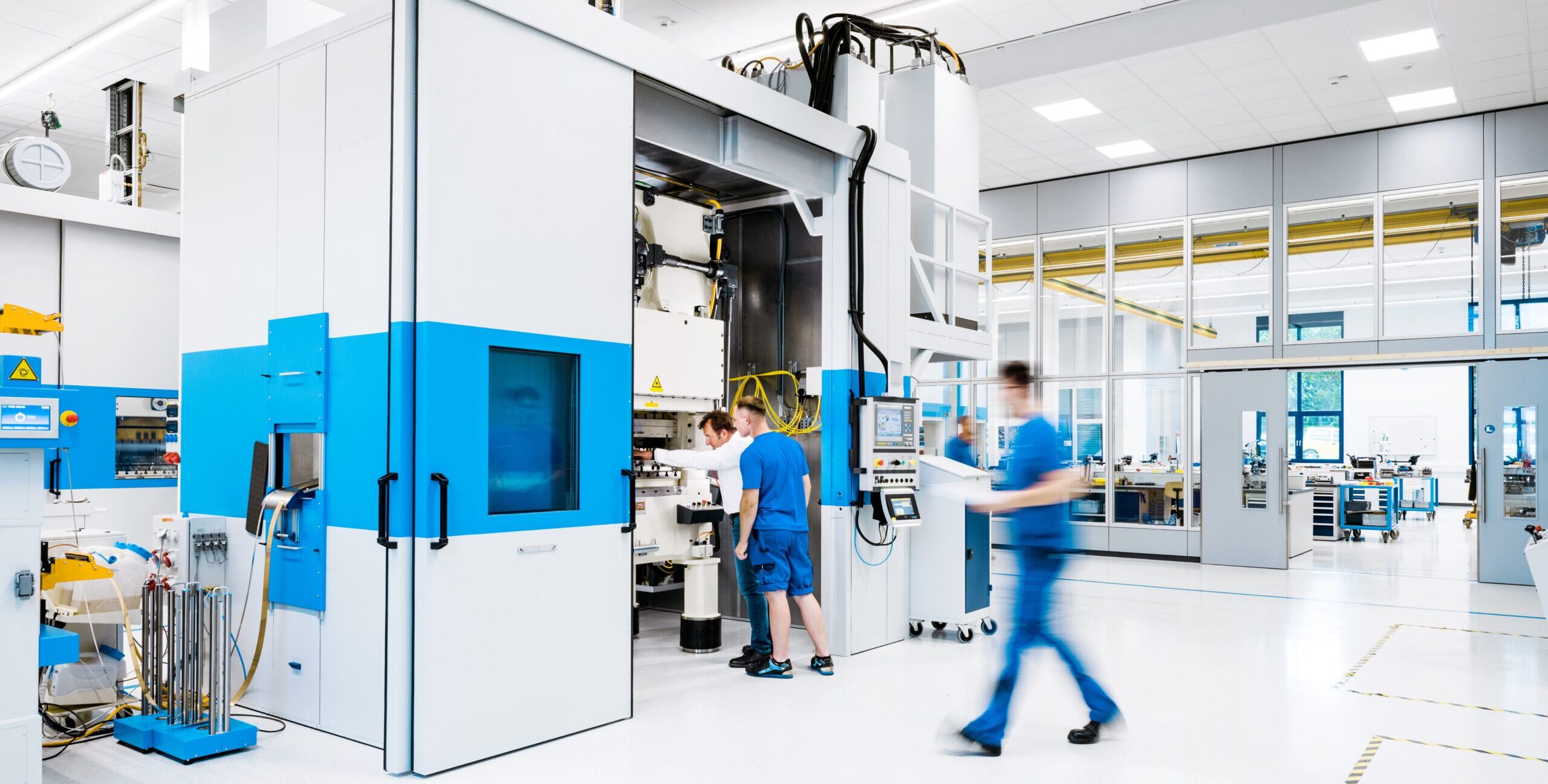
The project began with an initial conceptual pilot phase, which preceded the actual test and productive operation and in which the project team formed jointly by top flow and Kramski first outlined the basic structure of the future solution. This included, for example, the task of finding suitable middleware for importing machine data into top MES. The project team then implemented top MES initially with the standard functionalities. The team used these as the basis for the customer-specific adaptations, which they initially tested in the stamping shop.
“Our goal was to ensure that our ideas would work in practice before the full-scale rollout,” Nico Axtmann sums up.
To that end, the team implemented the following customer-specific customizations, among others:
Kramski implemented a dashboard with various KPIs to measure efficiency in key sub-areas. Together, these key figures also help the company to determine higher-level indicators such as OEE more easily. The KPIs stored on the dashboard include, for example, target/actual comparisons for set-up and occupancy times as well as information on how busy individual workstations are.
The collected and processed machine data is used at Kramski to determine optimum production quantities. The analyzed data can be used to ensure that machines do not overheat, wear out too quickly or that the company produces cost-inefficiently due to excessive power consumption.
Thanks to the adjustments made by the project team, the system can post important materials used in production retroactively and automatically. The reconciliation process is completely seamless – thanks to the interface-free connection between top MES and SAP. The project team also implemented automatic label printing based on the reported quantities. Important information on the batches for the customers is therefore always available.
Thanks to the collaborative project work, the Kramski Group was able to roll out the system to all workstations in Germany in 2021 as planned. The company now has a future-proof MES at its disposal that it can quickly adapt to future challenges thanks to its easy customization via ABAP. Overall, production has since become significantly more transparent and efficient.
In addition to the features offered by the new tool, Micha Holzmann also raves about the excellent collaboration between top flow and his company:
“The software is outstanding. It’s flexible and easy to use. But I’m particularly impressed by our collaboration with top flow. I’ve worked on many great projects before. But I’ve rarely encountered such a fair partner. Here’s a simple example: With many software solutions, customizations are often billed as expensive change requests. top flow, on the other hand, not only implemented our requests promptly and cost-effectively, but even incorporated some of our ideas into the default features of their software. That’s what I call constructive teamwork.”
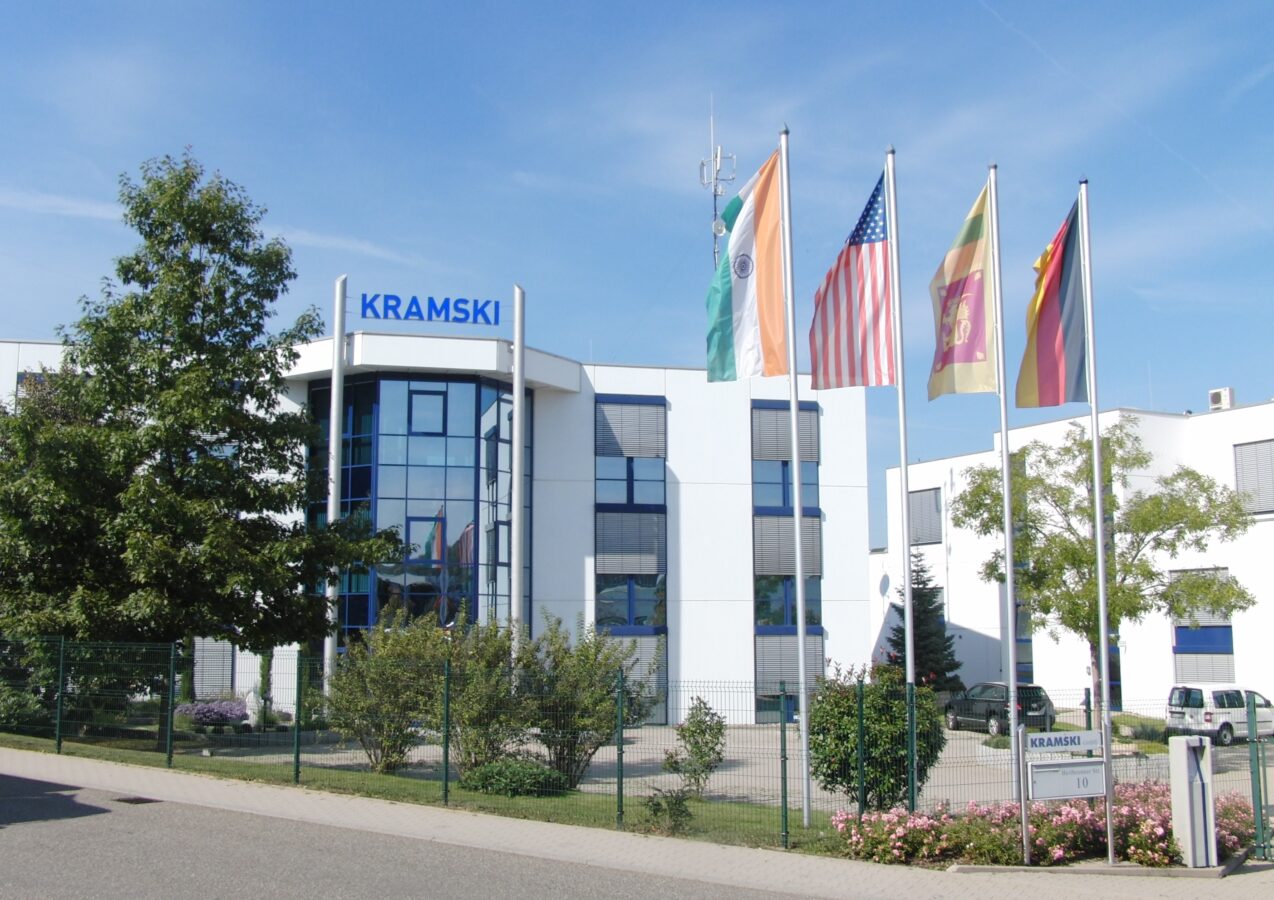
Location: Pforzheim (Headquarters)
Portfolio: Stamped and hybrid parts made of metal and plastic for the medical, mobility, and industrial sectors
Revenue: approx. 106 million euros (2017)
Founded: 1978
Employees: approx. 700 (2019)
Website: www.kramski.com

top flow GmbH


