

 Overview
The awakening of power – customers in sales 4.0
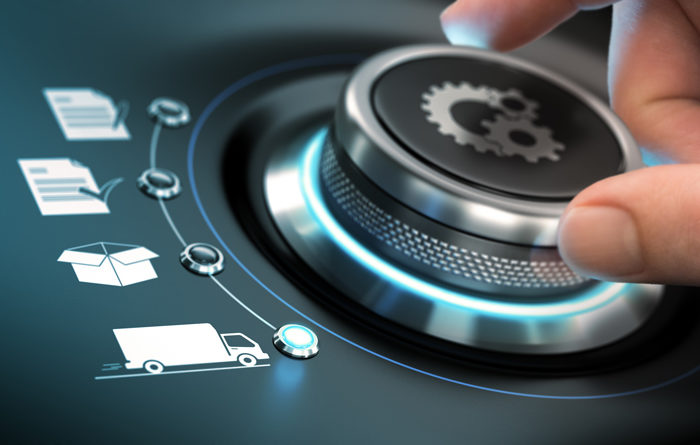
The digital power of the customer is dramatically changing the demands placed on companies.
Digitalization is calling many things into question – including the relationship between companies and their customers. Of course, most companies in most industries have had to make an effort to win and retain customers for decades. After all, there is competition almost everywhere and customers have a choice. In recent years, however, the balance of power has once again shifted significantly in favor of customers. Numerous publications have highlighted this. And this also corresponds to our experience. Two aspects are crucial here: Firstly, new market players with innovative offerings are popping up everywhere in the wake of digitalization. Competition is increasing, and established companies are constantly being left behind. And secondly, digitalization is making the market truly transparent for customers for the first time. They can search for offers worldwide, compare prices and exchange information with other users. Both have massively changed customer behavior – in the B2C and B2B sectors. In a nutshell: customers know their power and have become much more demanding.
Products are interchangeable, interactions are not
The study “The digital future of B2B sales” by consulting firm Roland Berger, for example, shows how this manifests itself. According to the study, 57% of the purchasing process in the B2B environment has already been completed when decision-makers first contact a sales employee. When they take this step, decision-makers are already well informed and expect both detailed information and quick answers. In general, interaction plays a decisive role. Where customers have a choice and products are becoming increasingly interchangeable, soft factors are gaining in importance. According to the Roland Berger study, three questions are particularly relevant for B2B customers: How easy is it to do business with the company, do I have to wait months for my product and how accessible is the company?
Digital internally, real time externally
Many companies have now recognized how important customer interaction is for their business. And they know what opportunities digitalization offers them to improve communication with customers. However, this is often limited to the phase leading up to the first contact. What follows is often ignored – in our view, this is a big mistake. After all, companies can only respond quickly and competently to a potential customer’s inquiry if the internal processes run smoothly. But this is often not the case. As a result, a lot of time still passes between the first contact and the offer being sent. And while the sales employee is still juggling e-mails, Excel spreadsheets and CAD drawings to check the feasibility of the order with the other departments, the near-customer may have already reached an agreement with a more fixed competitor. Speed therefore plays an enormous role today – where real-time is possible, real-time should also be the goal.
Opportunities for service
Internal sales processes can now be easily streamlined and thus made more efficient. The idea is to digitize all processes and data relating to a sales process and bring them together centrally. This means that all those involved are always up to date and communication between them is simplified. This not only significantly reduces the time it takes to prepare a quotation. Questions from a potential customer can be answered immediately and adjustments to the order can be made with little effort. The quality of the interaction improves noticeably and a successful deal becomes more likely.
Optimizing internal processes in this way is also interesting in terms of service. Because even if the product – a CNC milling machine, for example – has already been delivered, the interaction with the customer does not end. Companies that have all the necessary information directly to hand when a customer calls can also provide information immediately. Customers really appreciate this, especially when a machine is at a standstill – and it pays off for follow-up orders.
You might also be interested in…
E-Book: The paperless office
In many companies today, there is still a lot of paper in circulation – despite the new possibilities offered by digitization. All of this is slowing down work processes.
With a well-integrated system, be it DMS, ECM or xRM, piles of paper can be reduced. Read more in the e-book.



